


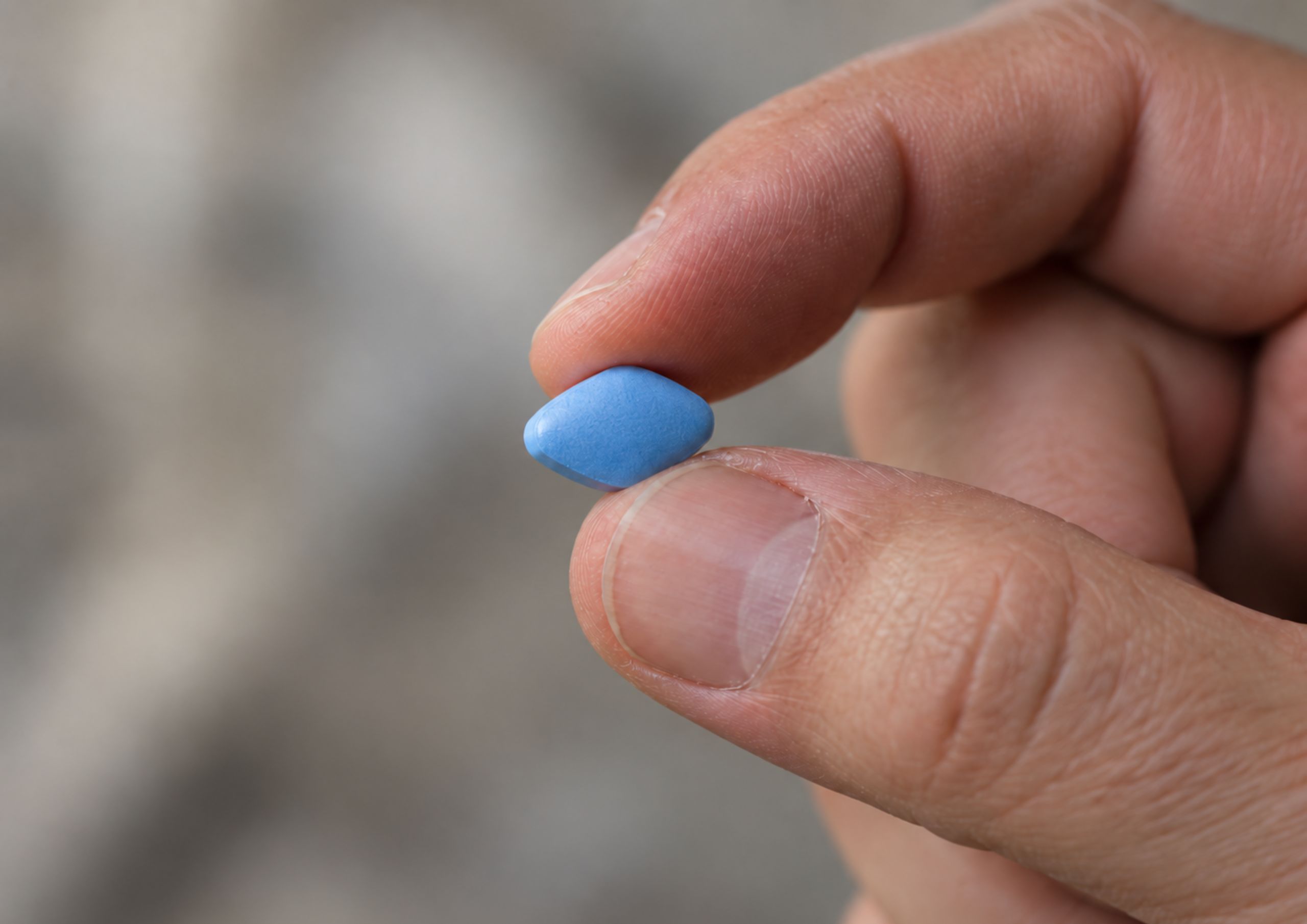

If you've been prescribed Viagra and it hasn't worked, or it worked for a while and then started to fade, you're not alone. It's one of the most common things men tell us at their first appointment. Quite often they've decided that tablets "just don't work for them" and assumed there's nothing else to try.
That usually isn't the case. Sometimes the tablet will work fine with a few small changes. Sometimes a different tablet works better. And for men where tablets really have stopped doing the job, there are other treatments available. Below we go through each of these, starting with the simplest.
Quick summary
- Make sure you're taking it properly. A lot of men who think Viagra doesn't work are taking it at the wrong time or after a big meal.
- Ask about a different tablet. There are four similar medicines available in the UK and some men get on better with one than another.
- See your GP. Things like low testosterone, diabetes and heart health can all stop tablets working as well as they should.
- If tablets still aren't enough, there are other treatments, including shockwave therapy and vacuum pumps.
1. Are you taking it the right way?
This sounds obvious, but it's worth going over. A Spanish study looked at men who'd been referred to a specialist clinic because their tablets "weren't working". Around 7 in 10 of them were making at least one mistake with how they took them. Once they were given proper advice, roughly three quarters of those men started responding to treatment.1
69%
of men whose tablets "didn't work" were taking them incorrectly
76%
of those men responded after being shown how to take them properly
The usual culprits are:
- It needs arousal to work. Viagra doesn't produce an erection on its own. It helps your body respond when you're sexually stimulated, so taking a tablet and waiting won't do much.
- Timing. The NHS advises taking sildenafil about an hour before sex.2 Too close to the time, or too far in advance, and it can seem like it's failed.
- Food. A big meal, especially a fatty one, slows it down.2 Take it on an empty stomach or after something light.
- Alcohol. A drink is fine. Several drinks can cause erection problems on their own, tablet or no tablet.
- Not trying it enough times. One or two attempts isn't a fair test, particularly if you're anxious about whether it'll work.
- The dose. Sildenafil comes in 25mg, 50mg and 100mg. If you've only been on a lower strength, ask your GP or pharmacist whether a higher one would be suitable.
One thing not to do is take two tablets to "make it work". You shouldn't take more than one in 24 hours, and doubling up only makes side effects more likely.
2. Have you tried a different tablet?
Viagra (sildenafil) is the best known, but there are three other similar medicines available in the UK. They all work in the same basic way, but they start working at different speeds and last different lengths of time. In the study above, the most common mistake of all was never having tried more than one of them.1
| Medicine | Starts working (approx.) | Lasts (approx.) |
|---|---|---|
| Sildenafil (Viagra) | 30 to 60 minutes | Around 4 hours |
| Tadalafil (Cialis) | 30 minutes to 2 hours | Up to 36 hours |
| Vardenafil (Levitra) | 25 to 60 minutes | Around 4 to 5 hours |
| Avanafil (Spedra) | 15 to 30 minutes | Around 6 hours |
Tadalafil is the one most men move on to. Because it lasts so long you don't have to plan around it, and food doesn't affect it much. It also comes as a low dose you take every day. A lot of men find that not having to think about timing at all takes the pressure off, and that can help in itself.
Speak to your GP or pharmacist about which would suit you, especially if you're on other medication.
3. Get yourself checked
If your tablets have stopped working as well as they used to, it's a good idea to see your GP. Erections rely on healthy blood vessels, nerves and hormones, and if one of those isn't right, a tablet can only do so much. Your GP will probably arrange some blood tests, which usually cover:
- Testosterone. Low testosterone can make tablets less effective, and getting it treated can help.
- Blood sugar. This checks for diabetes, which is one of the most common reasons tablets lose their effect over time.
- Cholesterol and blood pressure. Both affect blood flow, and both can be treated.
It's worth knowing that ED can be an early sign of heart disease. The blood vessels in the penis are smaller than the ones supplying the heart, so they tend to show problems first, sometimes years earlier. If things have got noticeably worse, please don't ignore it.
4. Other treatments
Tablets are where most men start, but they're far from the only option.
Shockwave therapy
This is what we do at ED Clinics, so we're obviously biased, but it's relevant here because it works in a completely different way to tablets. Viagra and similar medicines boost blood flow for a few hours. Low-intensity shockwave therapy aims to improve the blood supply itself by encouraging new blood vessels to grow in the penis.
It can also be used alongside tablets. A 2020 trial took men whose ED hadn't responded to tablets and gave them either real shockwave treatment or a dummy treatment. Six months later, just over half of the men who'd had the real treatment could get an erection firm enough for sex when taking their tablets. In the dummy group it was just over a quarter.3
A course with us is usually at least six sessions of around 20 minutes, spread over three weeks. It doesn't hurt and you can carry on as normal straight afterwards. Most men start to notice a difference within six to eight weeks. There's more on what to expect and the research behind it elsewhere on the site.
Vacuum pumps
A vacuum pump pulls blood into the penis mechanically, so it doesn't matter whether tablets work for you or not. There are no drugs involved and urologists recommend them a lot, including to help men recover after prostate surgery.
Alprostadil
This comes as either a cream or an injection, and acts directly on the blood vessels rather than working the same way as tablets. You'd need it prescribed by your GP or a specialist.
Implants
For men who haven't got anywhere with other treatments, a penile implant is a very effective option. It involves surgery, so it's normally considered once other things have been tried.
Please be careful buying online
When tablets stop working it can be tempting to look for something "stronger" online. A lot of what's sold on unregulated sites is fake, the wrong strength or contains things that aren't on the label. Stick to UK-registered pharmacies. And never take any of these medicines if you use nitrates, such as a GTN spray for angina.
So, what next?
If Viagra isn't working, start with the easy things. Check you're taking it properly, give it a fair go and ask about switching to another tablet. If that doesn't sort it, see your GP and get checked over. After that, there are plenty of other treatments to look at, and most men do find something that works for them.
If you'd like to know whether shockwave therapy could help, all of our partner clinics start with a consultation so you can find out if it's right for you before committing to anything.
References
- Romero Otero J, García Gómez B, Medina Polo J, et al. Evaluation of current errors within the administration of phosphodiesterase-5 inhibitors after more than 10 years of use. Urology, 2014. View abstract
- NHS. How and when to take sildenafil. nhs.uk
- Vinay J, Moreno D, Rajmil O, et al. Penile low intensity shock wave treatment for PDE5I refractory erectile dysfunction: a randomized double-blind sham-controlled clinical trial. World Journal of Urology, 2020. View abstract
This article is general information and isn't a substitute for advice from your GP, pharmacist or specialist.

